
The common cold and seasonal influenza are relentless human adversaries. While the pharmaceutical industry offers an array of synthetic symptom-maskers (decongestants and cough suppressants), they do absolutely nothing to assist the body in actually fighting off the invading viral pathogen. To actively engage and aggressively stimulate the body's innate defense mechanisms, clinical herbalists rely on the undisputed champion of the Native American pharmacopeia: Echinacea Purpurea (Purple Coneflower).
Understanding the Mechanism of Echinacea Purpurea
The remarkable efficacy of Echinacea originates from its dense concentration of unique phytochemicals, specifically high levels of alkylamides, complex polysaccharides, and chicoric acid. These naturally occurring compounds interact directly with human physiological pathways, essentially serving as biological "keys" that unlock the body's innate capacity to heal from severe viral and bacterial respiratory infections.

Echinacea is not a passive preventative vitamin; it is a highly aggressive immune stimulant. Its primary mechanism of action targets the process of phagocytosis. When the alkylamides enter the bloodstream, they act as massive biochemical alarm bells. They force the body's macrophages (the "pac-man" cells of the immune system) to rapidly multiply, become highly aggressive, and relentlessly hunt down and consume invading viral and bacterial cells. Furthermore, Echinacea acts as a potent inhibitor of hyaluronidase—an enzyme that bacteria use to break down human cell walls and spread infection. By blocking this enzyme, Echinacea physically "walls off" the infection, preventing it from spreading deeper into the lungs.
- Cellular Modulator: Massively upregulates macrophage activity, transforming sluggish immune cells into highly efficient, pathogen-destroying machines, providing rapid immune system support.
- Antioxidant Powerhouse: Protects delicate respiratory tissue from the severe oxidative stress and inflammation caused by viral replication.
- Systemic Balancer: Acts dynamically to stimulate the lymphatic system, drastically reducing swollen, painful lymph nodes during an acute throat infection.
Evidence-Based Application for Shortening Colds
Clinical herbalism emphasizes that the method of consumption dictates the medicinal outcome. For targeting an acute cold or flu, integrating Echinacea requires aggressive, immediate dosing. The clinical data on Echinacea is vast but often misunderstood. Massive meta-analyses, including those by the prestigious Cochrane Collaboration, have concluded that taking Echinacea as a daily preventative vitamin is largely ineffective. However, when high doses of standardized Echinacea extract are taken at the very first "tickle" of a sore throat or the first sign of a chill, it statistically reduces the duration and severity of the common cold by up to 30% compared to a placebo.
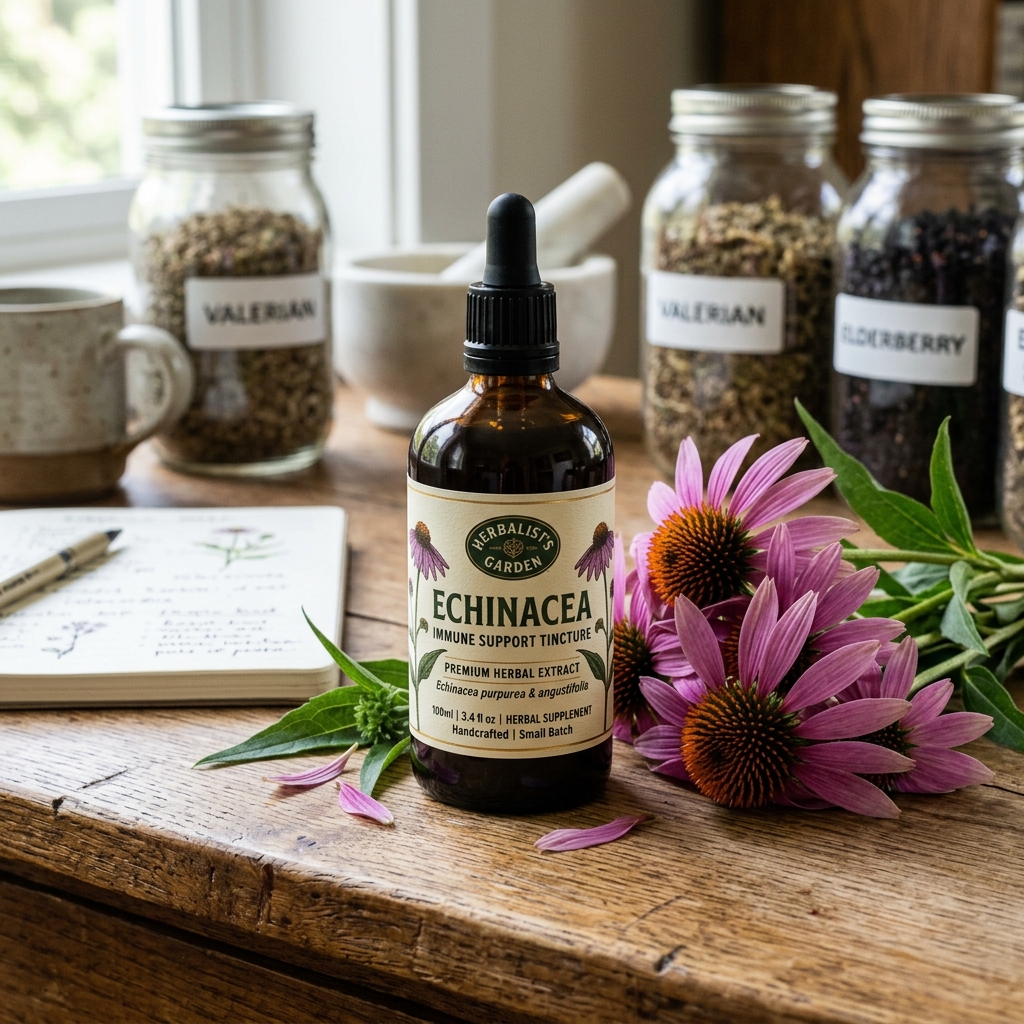
Optimal Dosage Guidelines: The "Shock" Method
Botanical interventions for acute viral infections require intense, frequent dosing. Timing is everything. If you wait until you are bedridden with a fever, Echinacea is far less effective. At the first sign of illness, practitioners employ the "shock" method: taking 1 to 2 dropperfuls of a high-potency liquid tincture (which guarantees maximum alkylamide absorption through the mucosal tissue in the mouth) every 2 hours for the first 24 to 48 hours of the illness, then reducing the dose to 3 times daily until symptoms completely resolve. The tincture will cause your tongue to intensely tingle and go numb—this is the exact physiological proof that the active alkylamides are present.
"Nature does not hurry, yet everything is accomplished. Healing with botanicals like Echinacea purpurea is a process of deep, structural restoration rather than a temporary masking of symptoms." - Sativa Sage Editorial
Safety and Autoimmune Contraindications
Purity matters entirely. Always ensure that your supply is explicitly sourced from the roots and aerial parts of Echinacea purpurea or Echinacea angustifolia. Because Echinacea is such a profound, non-specific immune stimulant, it is strictly contraindicated for individuals suffering from severe autoimmune diseases (like Rheumatoid Arthritis, Lupus, or Multiple Sclerosis). In these conditions, the immune system is already hyperactive and attacking the body; aggressively stimulating it further with Echinacea can trigger a massive, painful disease flare-up.
Related Reading: Raw Garlic for Antibacterial Support
Scientific Reference: Explore peer-reviewed clinical studies and research on this botanical at PubMed Central.
About Sativa Sage Editorial
Our editorial team consists of certified holistic health practitioners, herbalists, and medical writers dedicated to bridging the gap between traditional botanical wisdom and modern scientific research. Every article is rigorously fact-checked against peer-reviewed clinical studies.