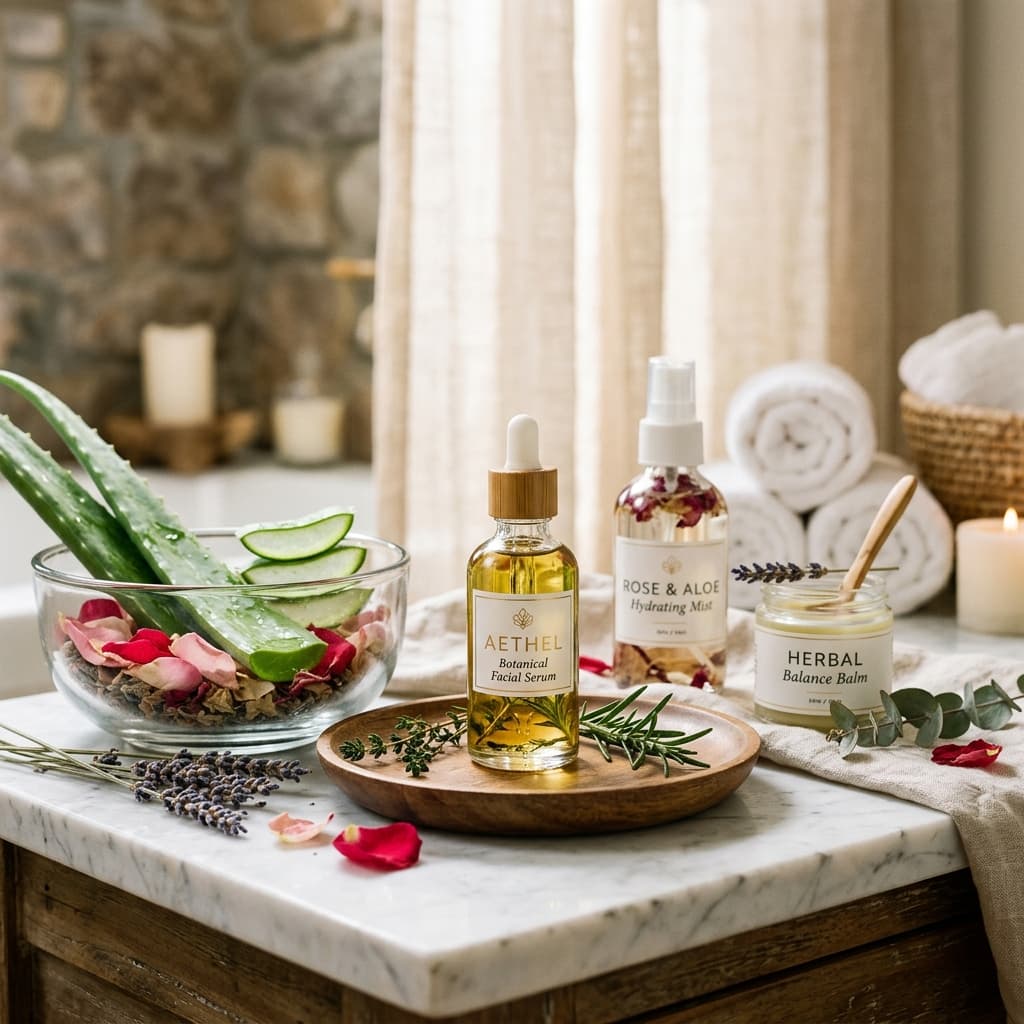
The skin is the body's largest organ, serving as a dynamic, living interface between our internal environment and the external world. For decades, the conventional beauty industry has treated skin health purely topically, aggressively stripping the acid mantle with harsh chemicals and synthetic retinoids. However, holistic dermatology understands that the skin is a mirror. Radiant, youthful skin is not created by a cream; it is a direct reflection of internal cellular vitality, optimal liver detoxification, and robust circulation.
Botanical skincare operates on a fundamentally different paradigm. By utilizing potent, plant-derived phytonutrients, antioxidants, and essential fatty acids, herbal medicine repairs the skin's barrier function, neutralizes free radicals, and stimulates deep collagen production without the destructive inflammation caused by synthetic anti-aging treatments.
1. Rosehip Seed Oil (Rosa canina)
Rosehip Seed Oil is arguably the most powerful natural anti-aging oil available. It is incredibly rich in trans-retinoic acid, a natural form of Vitamin A (retinol). Unlike synthetic prescription retinoids that cause severe peeling, redness, and sun sensitivity, the natural retinoic acid in Rosehips is delivered within a matrix of soothing essential fatty acids (Omega 3, 6, and 9).
This allows the oil to deeply penetrate the epidermis, accelerating cellular turnover, fading hyperpigmentation (sun spots), and stimulating collagen synthesis. Additionally, its exceptionally high Vitamin C content provides profound antioxidant protection against daily UV damage and environmental pollution.
2. Gotu Kola (Centella asiatica)
Gotu Kola is the undisputed king of botanical skin healing. Used extensively in Ayurvedic medicine to heal severe burns and wounds without scarring, modern science has validated its extraordinary mechanism of action. Gotu Kola contains active compounds called triterpenoids, specifically asiaticoside. These compounds actively stimulate the production of Type I collagen, the structural protein responsible for the skin's firmness and elasticity.
Furthermore, Gotu Kola profoundly improves microcirculation. By strengthening the tiny capillaries beneath the skin, it ensures that skin cells receive maximal oxygen and nutrients, resulting in a luminous, highly oxygenated "glow" that cannot be replicated by makeup.
3. Calendula (Calendula officinalis)
For individuals struggling with sensitive, inflamed, or acne-prone skin, Calendula (Marigold) is a botanical lifesaver. It possesses powerful anti-inflammatory, antifungal, and antibacterial properties. Calendula extract actively promotes the healing of micro-tears in the skin barrier and reduces the painful swelling associated with cystic acne and rosacea. It is gentle enough to be used on infant skin, yet potent enough to heal chronic dermatitis.
4. Sea Buckthorn (Hippophae rhamnoides)
Sea Buckthorn berry oil is a nutrient powerhouse, containing over 190 bioactive compounds. It is famously one of the only plant sources on earth to contain the elusive Omega-7 fatty acid (palmitoleic acid). Omega-7 is a fundamental building block of healthy human skin and mucous membranes. Supplementing with or topically applying Sea Buckthorn oil dramatically improves skin hydration, deeply repairs the lipid barrier, and provides serious defense against extreme weather conditions.
The Internal-External Synergy
True botanical skincare must be approached synergistically. Applying Rosehip and Sea Buckthorn topically provides critical barrier support, but combining this with the internal consumption of liver-detoxifying herbs (like Dandelion Root) and circulation-enhancing herbs (like Gotu Kola) ensures that the skin is being nourished from both the outside in, and the inside out.
Related Reading: Gotu Kola: The Herb of Longevity
Scientific Reference: Explore peer-reviewed clinical studies and research on this botanical at PubMed Central.
About Sativa Sage Editorial
Our editorial team consists of certified holistic health practitioners, herbalists, and medical writers dedicated to bridging the gap between traditional botanical wisdom and modern scientific research. Every article is rigorously fact-checked against peer-reviewed clinical studies.