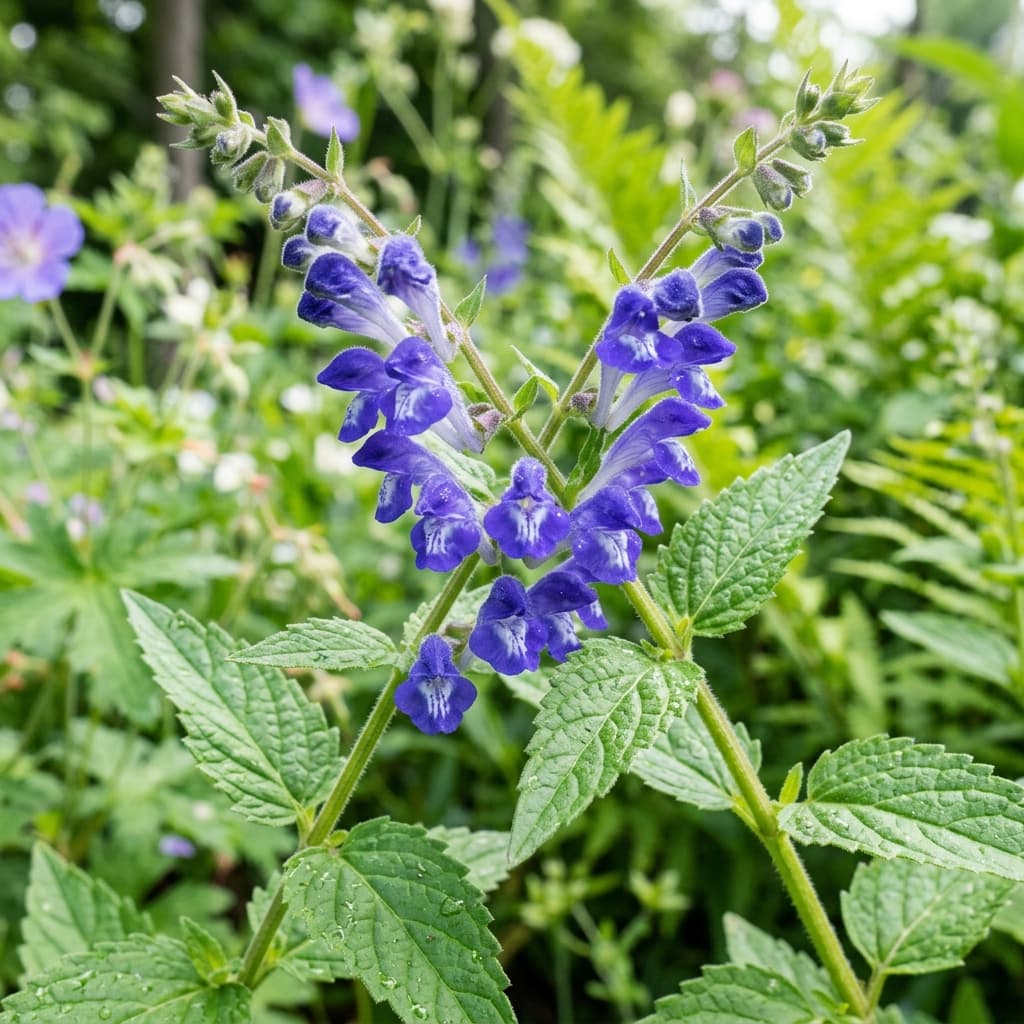
Migraines are debilitating headaches often accompanied by nausea, vomiting, and extreme sensitivity to light. Feverfew (Tanacetum parthenium) has been used since ancient Greece to treat headaches, fevers, and inflammatory conditions. Modern research has identified its primary active compound, parthenolide, as a key factor in migraine prevention, establishing it as a clinical favorite.
The Role of Parthenolide in Preventing Headaches
Feverfew works by inhibiting the release of inflammatory substances, particularly serotonin and prostaglandins, from blood platelets. This prevents the abnormal dilation and constriction of blood vessels in the brain that trigger migraine attacks. For maximum efficacy, feverfew must be taken consistently for several weeks to build up its protective, modulating effects on vascular system inflammation.
How to Safely Integrate Feverfew
Feverfew is typically consumed as a standardized capsule containing parthenolide or as a liquid tincture. Because of its bitter taste, raw leaves are rarely chewed, as they can cause mouth sores in sensitive individuals. While generally very safe, it should not be taken during pregnancy or if you take blood thinners. Integrating feverfew with magnesium forms a powerful, evidence-based protocol.
Long-Term Benefits and Success
Unlike quick-fix pain relievers, Feverfew is a long-term preventive solution. Clinical trials show a significant decrease in both the frequency and severity of migraine attacks when taken daily over a three-month period. This allows sufferers to reclaim their quality of life without relying on heavy prescription drugs.
Historical Context of Feverfew
The name "Feverfew" comes from the Latin word *febrifugia*, which translates directly to "fever reducer." Historically, medieval herbalists utilized it for fevers and acute muscle aches. Today, its primary clinical application has shifted toward migraine prophylaxis, reflecting our refined understanding of its anti-inflammatory effects on cerebral blood vessels.
Related Reading: Peppermint Oil for Headaches
Scientific Reference: Explore peer-reviewed clinical studies and research on this botanical at PubMed Central.
About Sativa Sage Editorial
Our editorial team consists of certified holistic health practitioners, herbalists, and medical writers dedicated to bridging the gap between traditional botanical wisdom and modern scientific research. Every article is rigorously fact-checked against peer-reviewed clinical studies.